












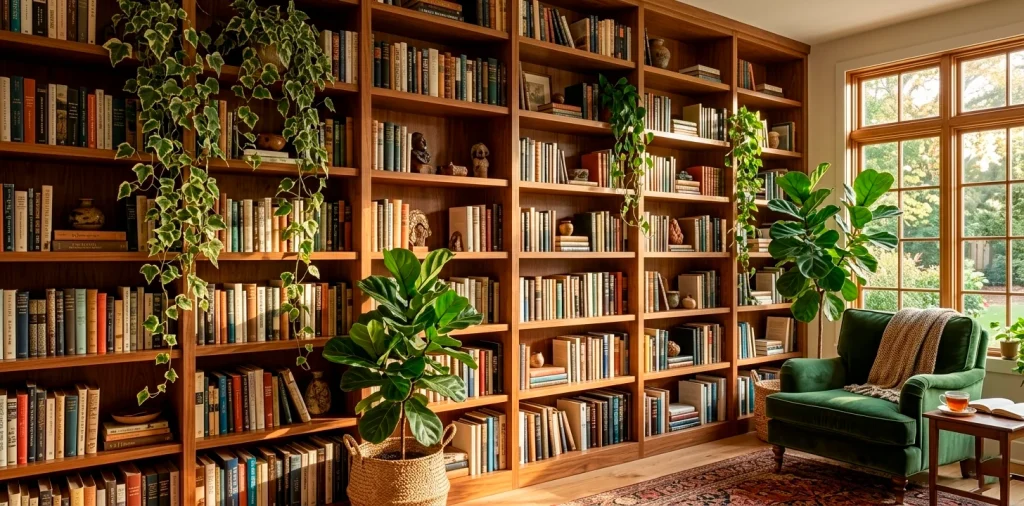

Creating a home library shouldn’t feel like building a stuffy museum. I’ve always felt that books and plants belong together like coffee and quiet mornings. If your reading nook feels a bit sterile, adding a few leafy companions can breathe life into those dusty shelves. Ready to turn your book stash into a lush sanctuary? Let’s talk plants!
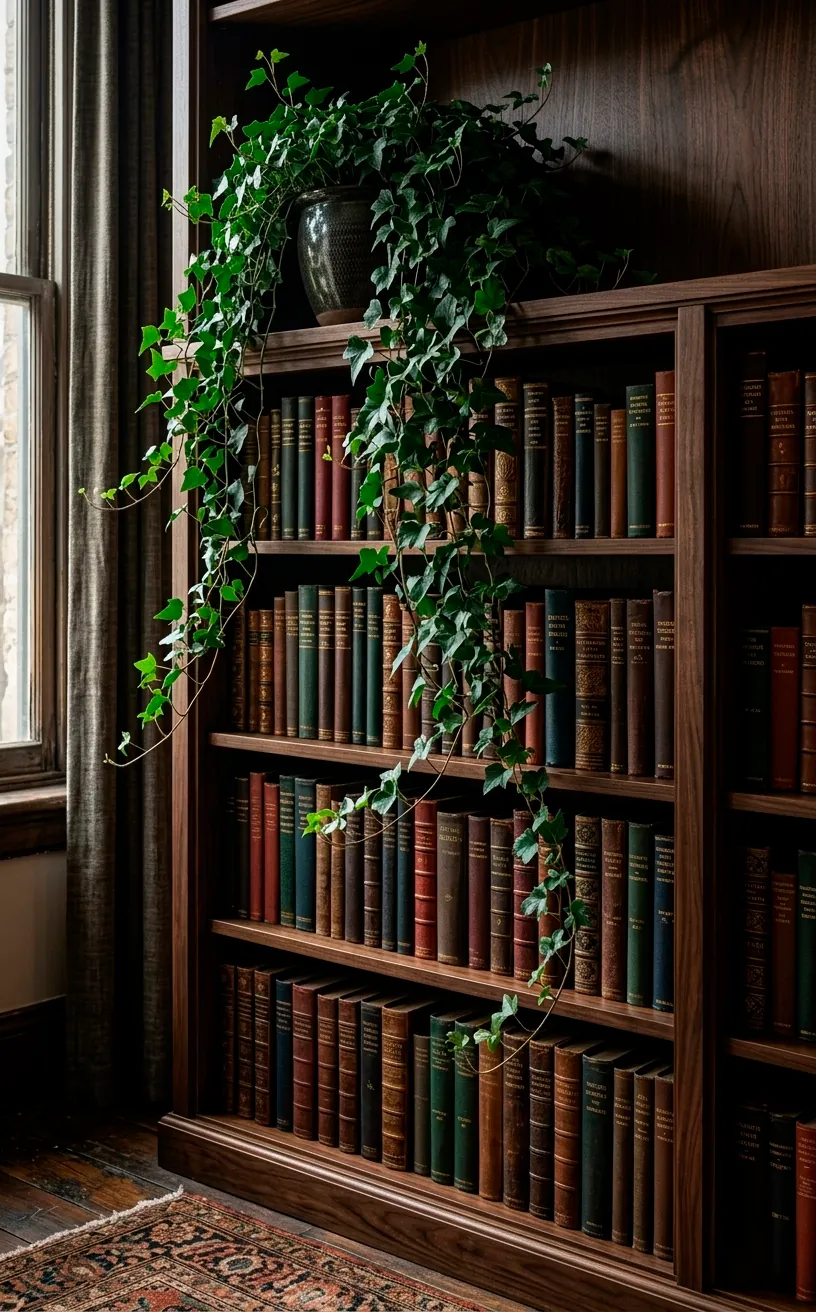
Cascading Ivy on High Shelves
Ivy is basically the “gateway drug” for plant parents, isn’t it? If your shelves feel a bit static, a trailing Pothos or English Ivy brings that needed “wild” energy. I personally love letting mine drape over my copy of The Great Gatsby. Just make sure you aren’t drenching your first editions when you water them! Why settle for straight lines when you can have leafy waterfalls?
Trust me, watching those vines slowly creep down towards your reading chair is incredibly satisfying. Trailing plants break up the rigid geometry of square cubbies. Just watch out for the occasional leaf that tries to bookmark your current read for you. IMO, it’s the easiest way to get that “secret garden” vibe without the actual dirt under your fingernails. 🌿
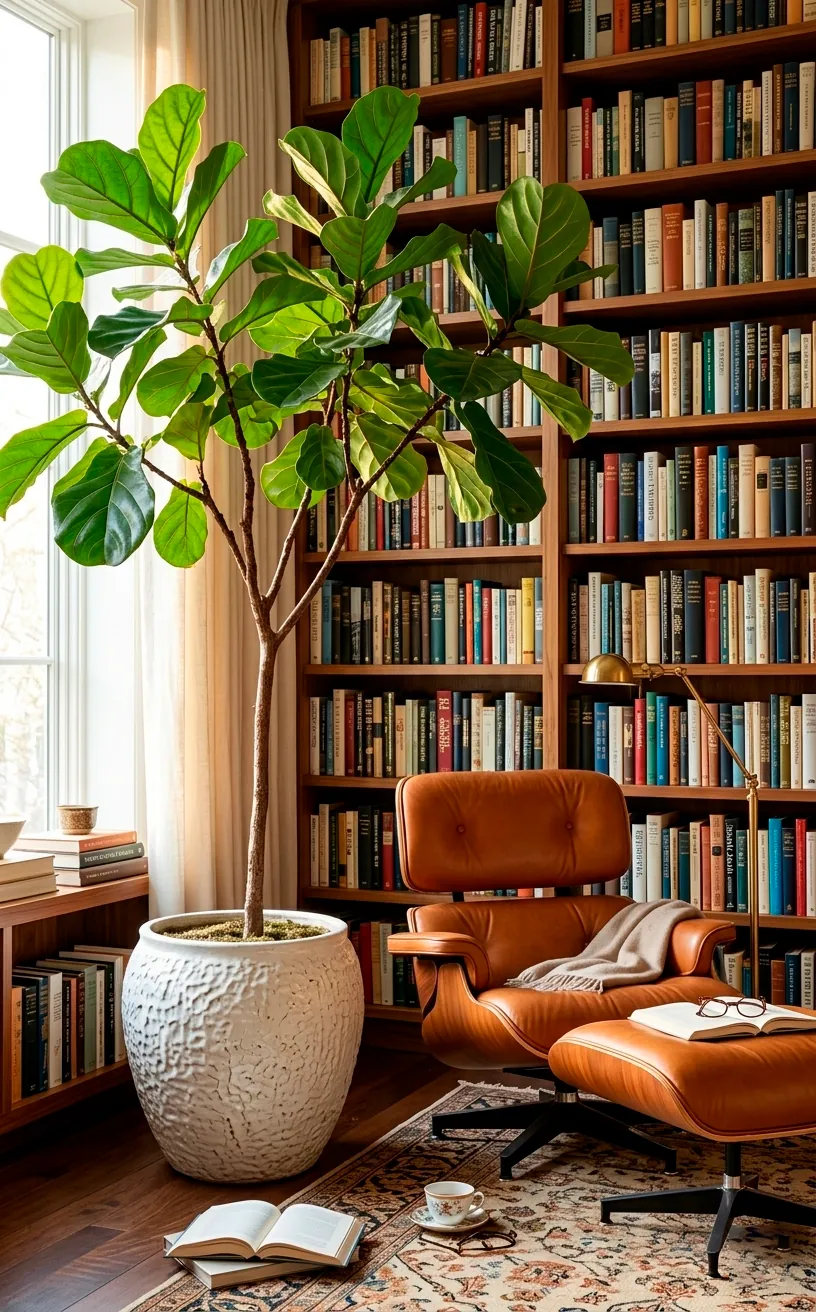
The Mighty Fiddle Leaf Fig
Every home library needs a “main character” plant, and the Fiddle Leaf Fig usually auditions for the role. These big, glossy leaves act as a natural anchor next to a heavy oak desk or a cozy nook. I’ve found that placing one in a sunny corner adds a level of sophistication that smaller succulents just can’t touch. Bold greenery creates a focal point that draws the eye away from the clutter of mismatched spines. Plus, they look great in those oversized terracotta pots we all hoard. Who knew a tree could be so picky yet so worth it?
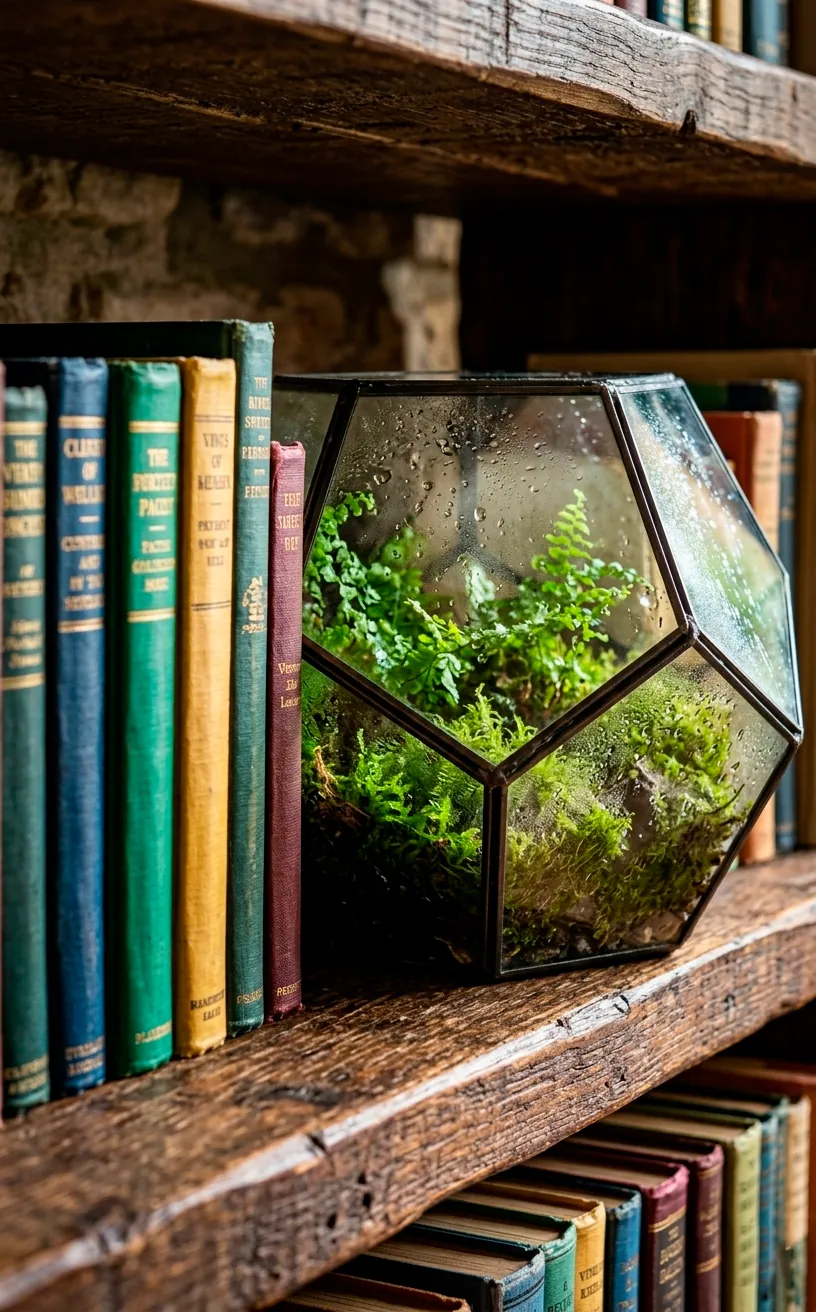
Terrariums as Living Bookends
Why use boring metal bookends when you can have a miniature ecosystem?
Glass terrariums filled with moss and ferns keep your books upright while adding a touch of Victorian whimsy. I once built one inside an old fishbowl, and it became the most talked-about piece in my room.
They’re perfect for small spaces where a full-sized tree might feel like an intruder.
Moss terrariums offer a low-maintenance solution for those of us who forget to water things for weeks at a time. Seriously, they’re like the “set it and forget it” of the botanical world. FYI, they love the indirect light found in most libraries.
Botanical Art Prints
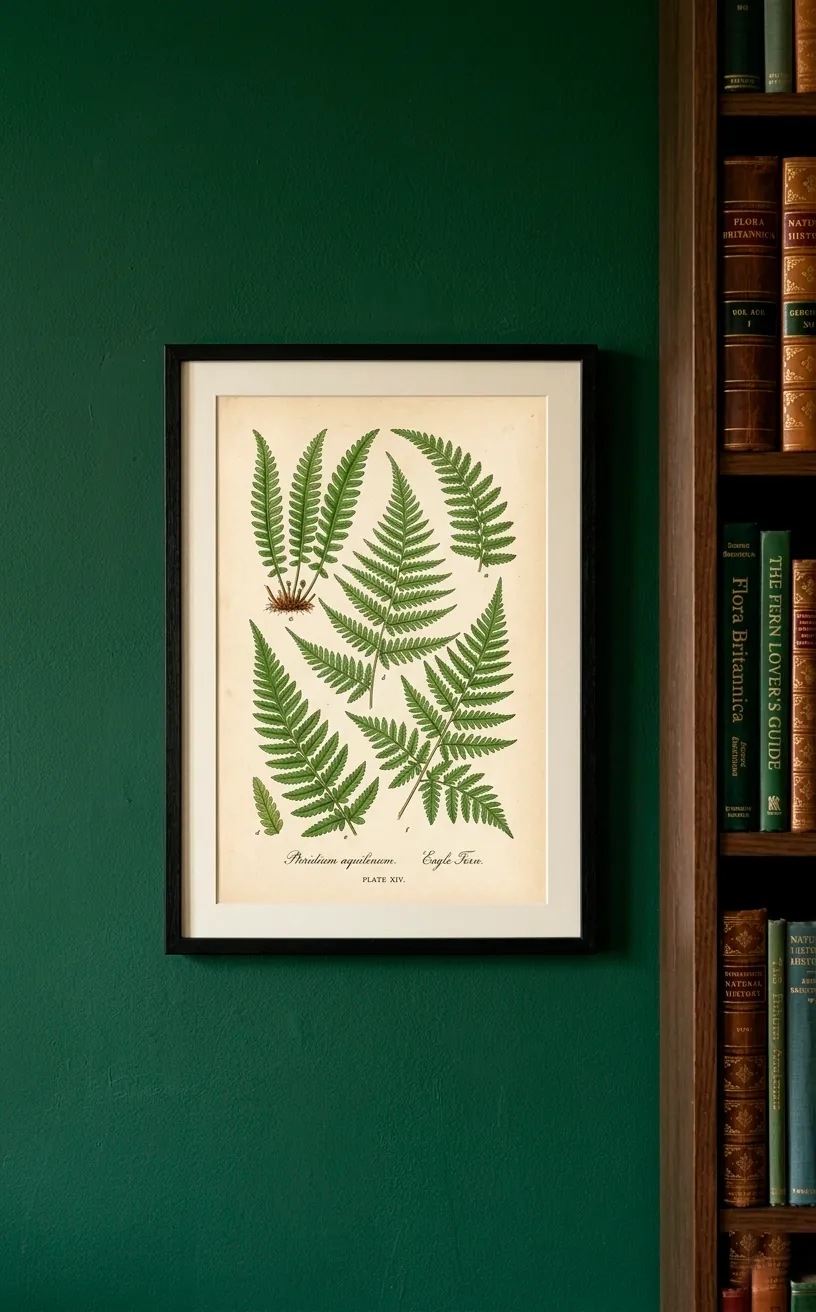
If your thumb is more “death touch” than “green,” botanical illustrations are your best friends. Vintage-style sketches of ferns or pressed flowers pinned between the shelves add a scholarly, old-world feel. I recently swapped a generic landscape for a detailed monstera print, and it instantly elevated the room’s IQ.
These prints provide a natural aesthetic without the risk of root rot. Framed botanical art adds organic textures to the wall space between your shelves. Ever noticed how a simple leaf sketch makes everything look more intentional? If you want to lean into this vibe, check out these black and white home library ideas for a sharp contrast.
Air Plants in Unexpected Places
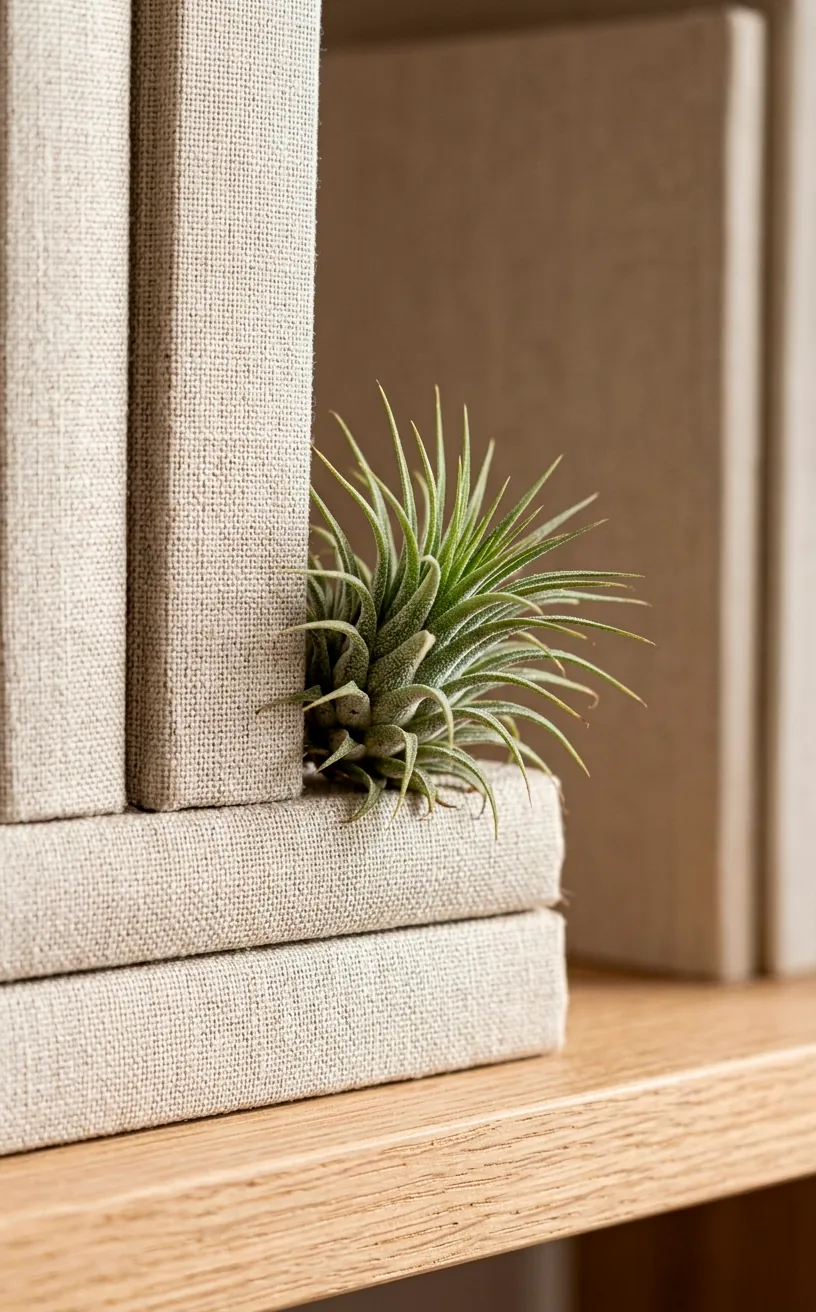
Air plants (Tillandsia) are the ultimate “hack” for the lazy decorator. Since they don’t need soil, you can tuck them directly into the gaps between your books or perch them on top of a stack of encyclopedias. I sprinkle them around like leafy confetti whenever my shelves look a bit “dry.” Air plants add subtle organic accents without taking up valuable shelf real estate. Have you ever seen a plant look so cool just sitting on a leather-bound spine? They’re basically the cool, effortless teenagers of the plant world.
Eucalyptus Bunches in Vases
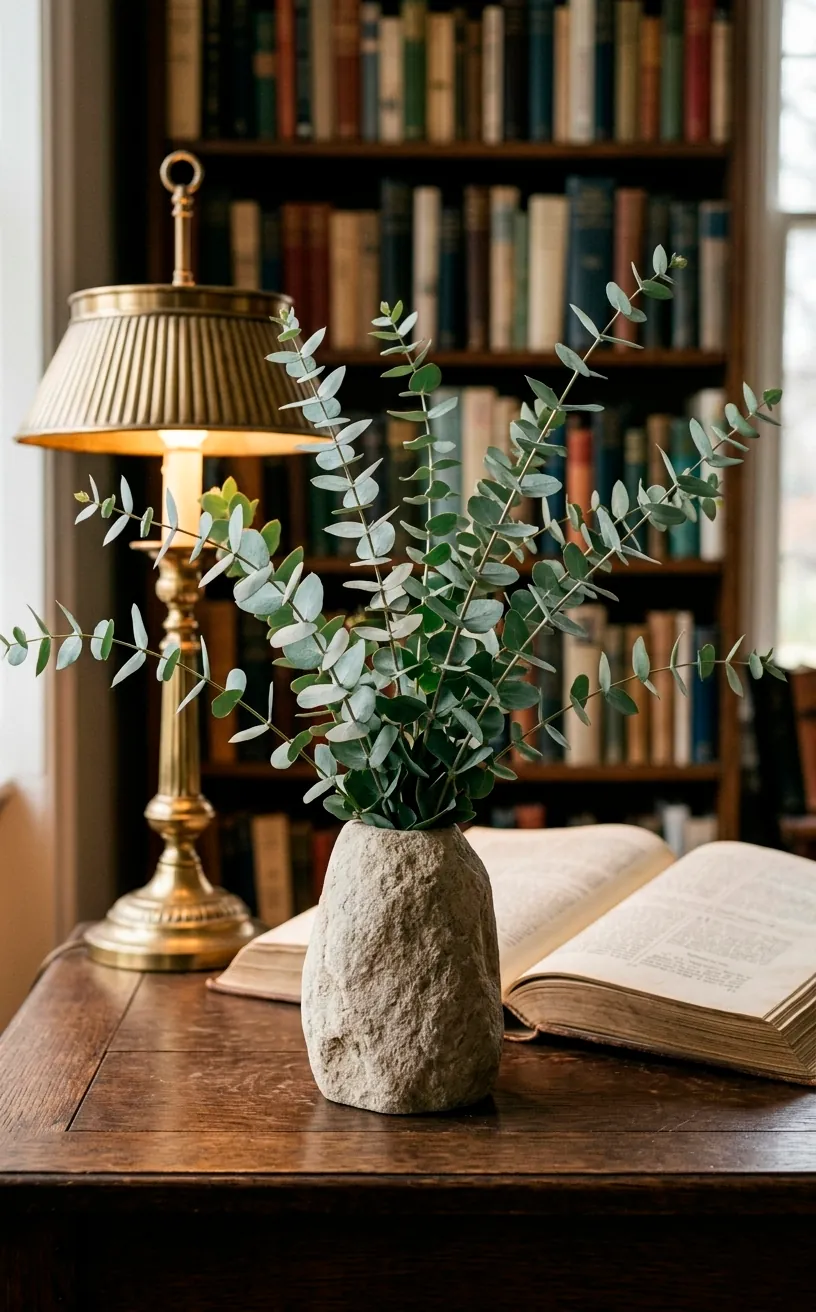
Let’s talk about the smell. Dried or fresh eucalyptus brings a spa-like aroma to your reading sanctuary that candles just can’t mimic.
I usually stick a few sprigs in a tall ceramic vase next to my reading lamp. The silvery-blue hue provides a nice break from the standard “jungle green” palette.
Aromatic greenery enhances the sensory experience of a home library. It makes those late-night reading sessions feel a bit more luxurious. Plus, they stay looking good even as they dry out, which is a win for anyone who lacks a green thumb. 🌿
Moss-Lined Shelving
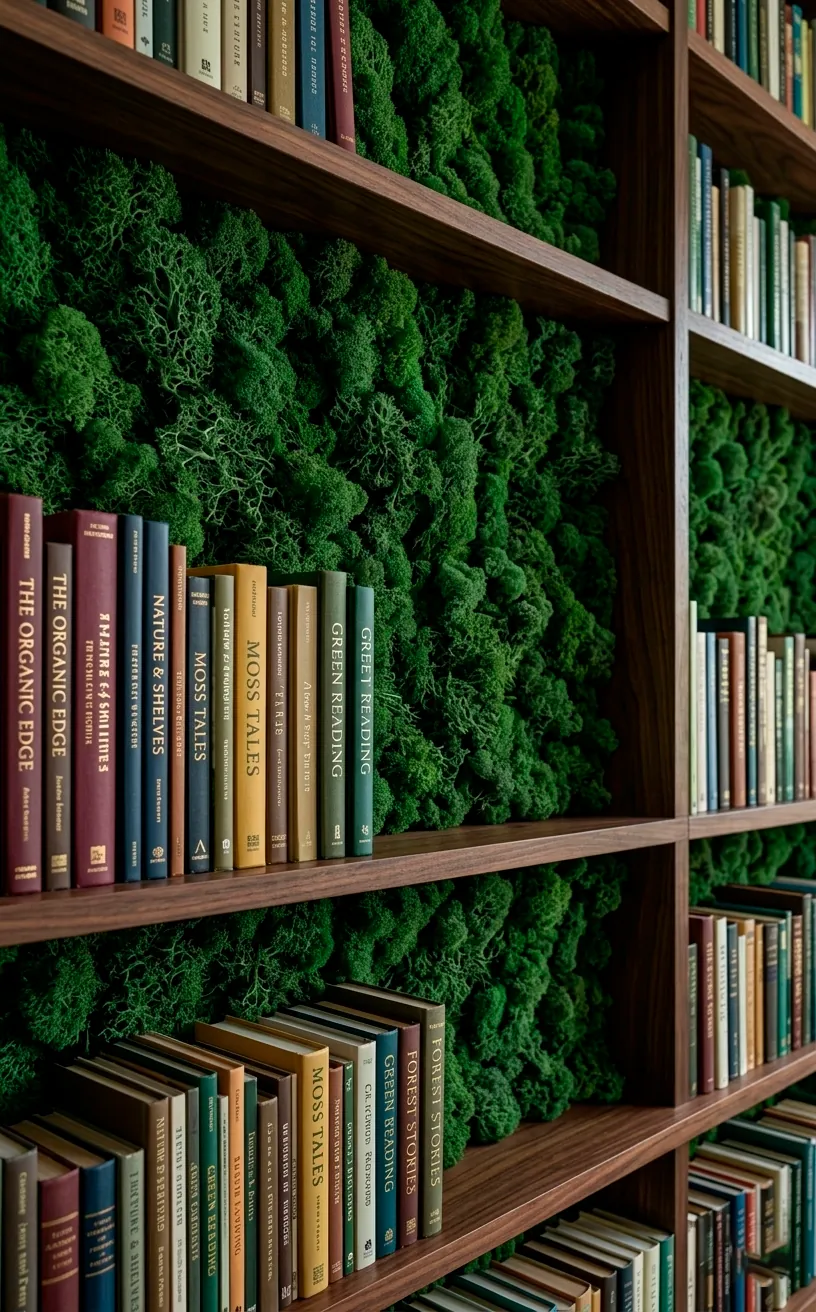
This one is for the true forest-dwellers at heart. Preserved moss mats can line the back of your bookshelves to create a literal green wall behind your literature. It’s a bold move, but the texture is unbeatable. I tried this in a small nook, and it made the space feel like a hobbit hole in the best way possible.
Preserved moss adds rich tactile depth to your library’s backdrop. It requires zero light or water, making it the perfect choice for those darker, moodier corners. For more inspiration on creating a cohesive environment, look into these biophilic living room designs to see how nature truly integrates.
Pressed Flower Bookmarks and Displays
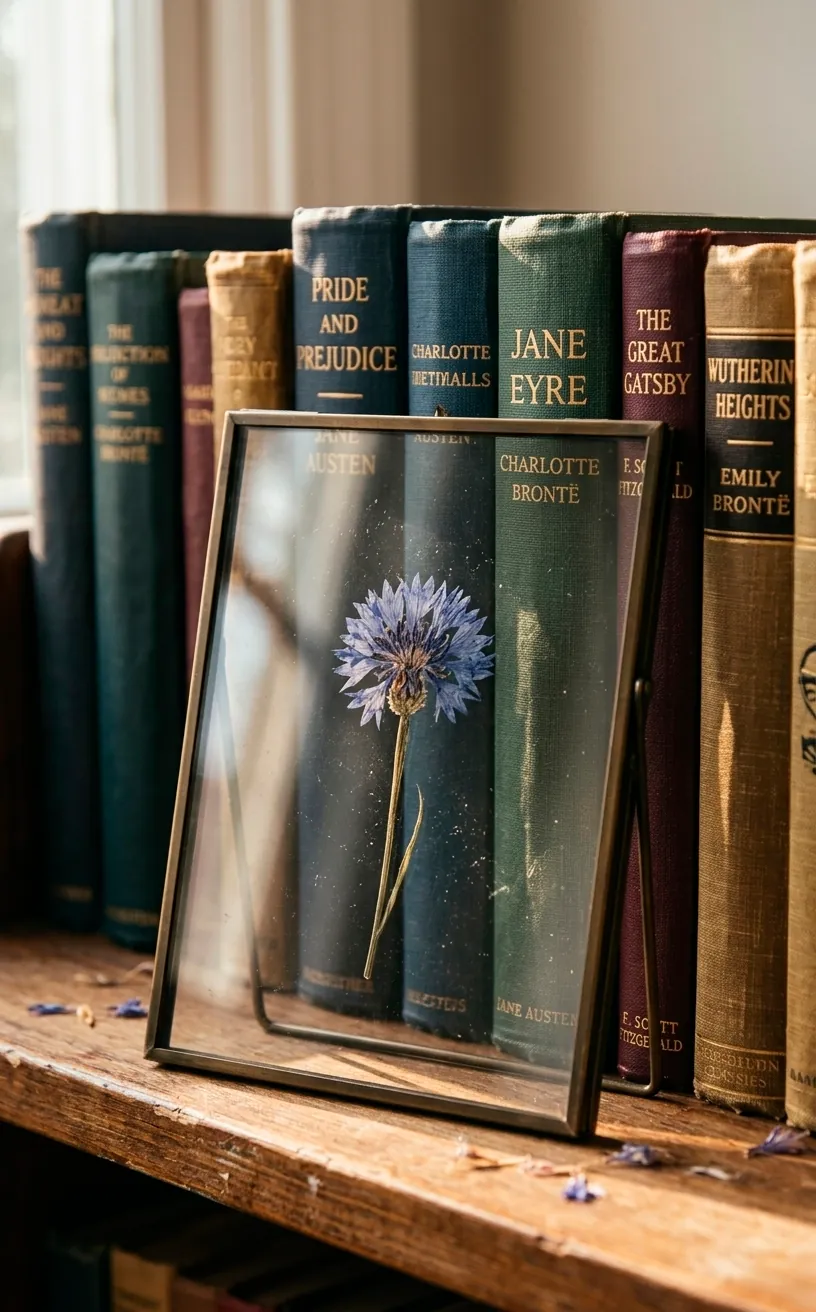
Don’t forget the small details that make a library feel lived-in. Pressing flowers from your garden and displaying them in glass frames—or even just using them as bookmarks—adds a delicate, personal touch. It’s a great way to preserve a memory while sticking to your botanical theme. Pressed botanicals offer a delicate aesthetic that balances out heavy wooden furniture. Why buy plastic accessories when nature provides the best ones for free? Just don’t forget where you put them, or you’ll be finding dried petals in your cookbooks for years to come!
Conclusion
Blending your love for literature with a splash of greenery makes your library the most relaxing room in the house. Whether you go big with a fig or small with air plants, nature always finds a way to make a space feel more human. Which of these botanical touches are you adding to your shelves first? Let me know in the comments! Happy reading!
Related posts
See All15 Vintage Circus Inspired Details for Playful Kids Bedroom Decor
Bring the magic of the big top home! Discover 15 playful, vintage circus-inspired decor details that will transform your kid's …
Read moreThe Complete Guide to Styling a Dining Room Credenza for Everyday Elegance
Give your dining room credenza the ultimate glow-up. Discover easy, elegant styling tips that balance everyday function with show-stopping design.
Read more15 Dried Citrus and Cinnamon Garlands for a Naturally Cozy Kitchen
Forget mass-produced decorations. Transform your kitchen into a naturally cozy, aromatic sanctuary with these 15 beautiful dried citrus and cinnamon …
Read moreThe Dog-Friendly Camper: Designing a Van Interior for Your Pets
Transform your camper van into the ultimate dog-friendly adventure mobile! Discover clever interior design hacks, durable materials, and cozy setups …
Read more